Homeowner guide · Water consumption
How to Check for a Water Leak Using Your Water Meter
Your water meter can help reveal unexplained water consumption even when no leak is visible. Stop known water use, record the reading and compare it later. An increase is a reason to investigate—not proof of where a leak is or what caused it.
A practical guide from The Cape Town Plumber (Pty) Ltd, serving Durbanville and the surrounding Northern Suburbs.
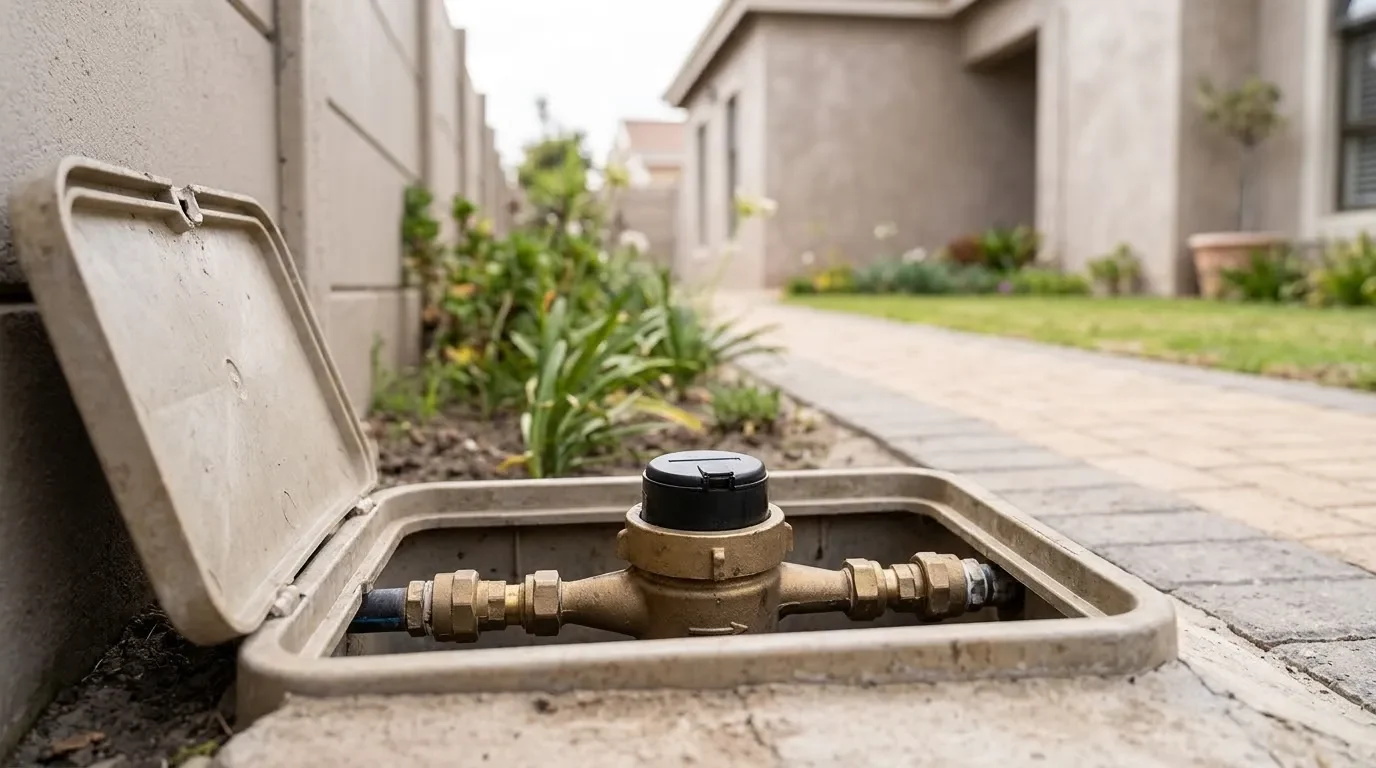
Images in this guide are AI-generated illustrations, not photographs of our staff, customer properties or completed jobs. Meter drawings are not authoritative technical diagrams.
Before you start: observation, not a repair
This test is most useful when you have noticed unexpected consumption, hear refilling without an obvious reason, or suspect a supply leak. It does not diagnose damp walls, drainage faults or rainwater ingress by itself.
If water is actively flooding the property or is near electrical equipment, do not wait for a meter test. Keep clear of hazards and use our emergency plumbing guidance or call 079 291 7407.
You need a safe view of the correct meter, a phone or notebook, and a period when everyone can avoid water use. You do not need tools, excavation or access inside a wall.
How to carry out the water-meter test
- 01
Identify the correct meter
First establish which meter serves your home. It may be near the boundary, in an outdoor box or elsewhere on the property. An estate or sectional-title property may have a municipal bulk meter and a separate private sub-meter. An isolation valve controls a supply; it is not itself a meter.
Check the meter identification against your account or property information where available. If the supply is shared or you cannot identify it confidently, ask the managing agent, body corporate or relevant water provider before drawing conclusions. A bulk reading may include other homes and common-area irrigation.
Observe only where access is safe. Do not lift a heavy cover, enter a chamber, reach into flooded equipment, remove seals or dismantle a meter. Do not force valves or operate municipal equipment. A leak around the meter itself needs the responsible water provider or property manager to clarify the appropriate repair boundary.
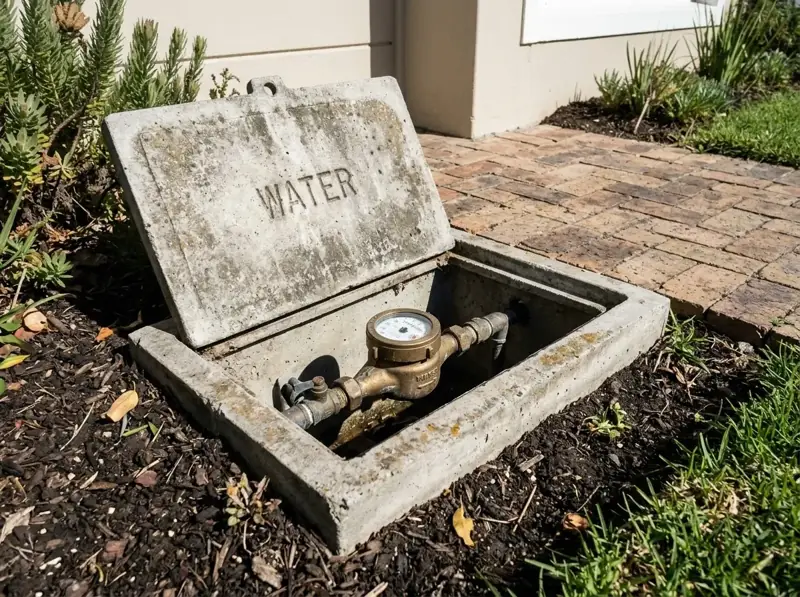
Meter-box illustration. Actual locations, covers and supply arrangements vary. - 02
Photograph the starting reading and time
Take a clear photograph of the full display and record the time. Note the units shown on the actual meter. Mechanical rollers, pointer dials and digital displays do not all use the same colours, decimal positions or layout. Read the manufacturer’s instructions if the display is unclear; do not assume that every red digit means litres.
One cubic metre (m³) equals 1,000 litres, and one kilolitre (kL) also equals 1,000 litres. Compare like-for-like readings from the same register. Do not subtract a litre display from a cubic-metre display, and do not interpret a partial or sleeping digital screen as a confirmed zero reading.
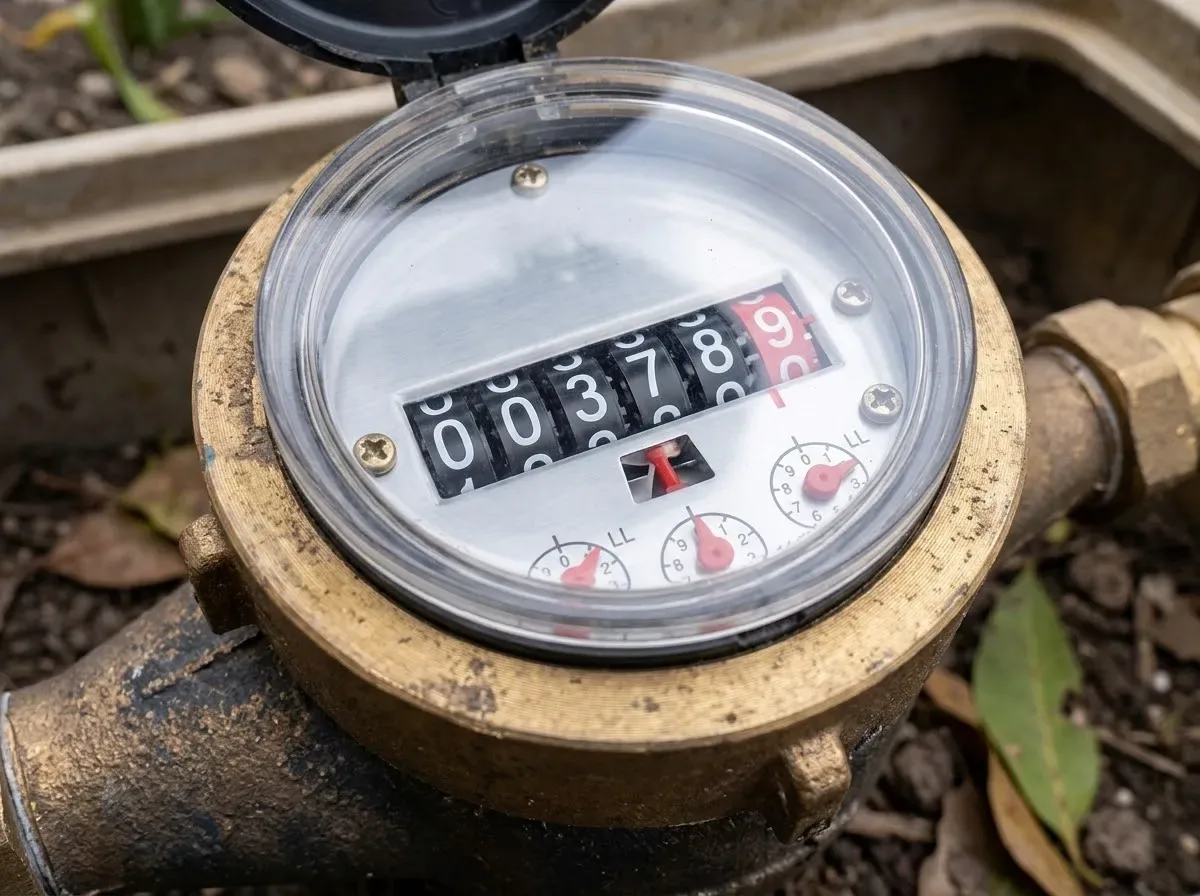
Illustrative register only—not a reading example. Use the units and markings on your own meter. - 03
Stop all known water use
Close taps and stop showers, washing machines, dishwashers and irrigation. Do not flush toilets during the test. Let any recently flushed cistern finish refilling before you record the starting condition. Ask everyone using the supply to avoid water use until the second reading.
Check for automatic consumption: storage-tank refill valves, pool top-up systems, irrigation schedules and other connected equipment may draw water even when every tap is closed. Do not disable essential or unfamiliar equipment. If a shared or automatic supply cannot be paused safely, the result needs that qualification.
Leave the supply on for this observation: shutting off the supply feeding the meter would prevent the normal comparison. This is not advice to manipulate a municipal stopcock. Active flooding or water near electricity takes priority over testing—keep clear and get urgent assistance instead.
- 04
Observe flow and compare a second reading
Where fitted and visible, watch the flow indicator or the smallest readable part of the register. Movement can show that water is passing through the meter, but different designs respond and display flow differently. A still photograph alone cannot demonstrate movement.
The City of Cape Town’s published leak-check guide describes recording the meter, waiting 15 minutes with taps closed and no toilet flushing, then comparing readings. Treat that as a starting observation under controlled conditions, not a guarantee that every leak will show within 15 minutes.
If practical, a 30–60 minute comparison can make small changes easier to see, provided water use remains stopped and it is safe to wait. Record the end time and take a second photograph. Restart the comparison if someone uses water. For digital meters, allow for the model’s display or update behaviour rather than assuming an immediate reading change.
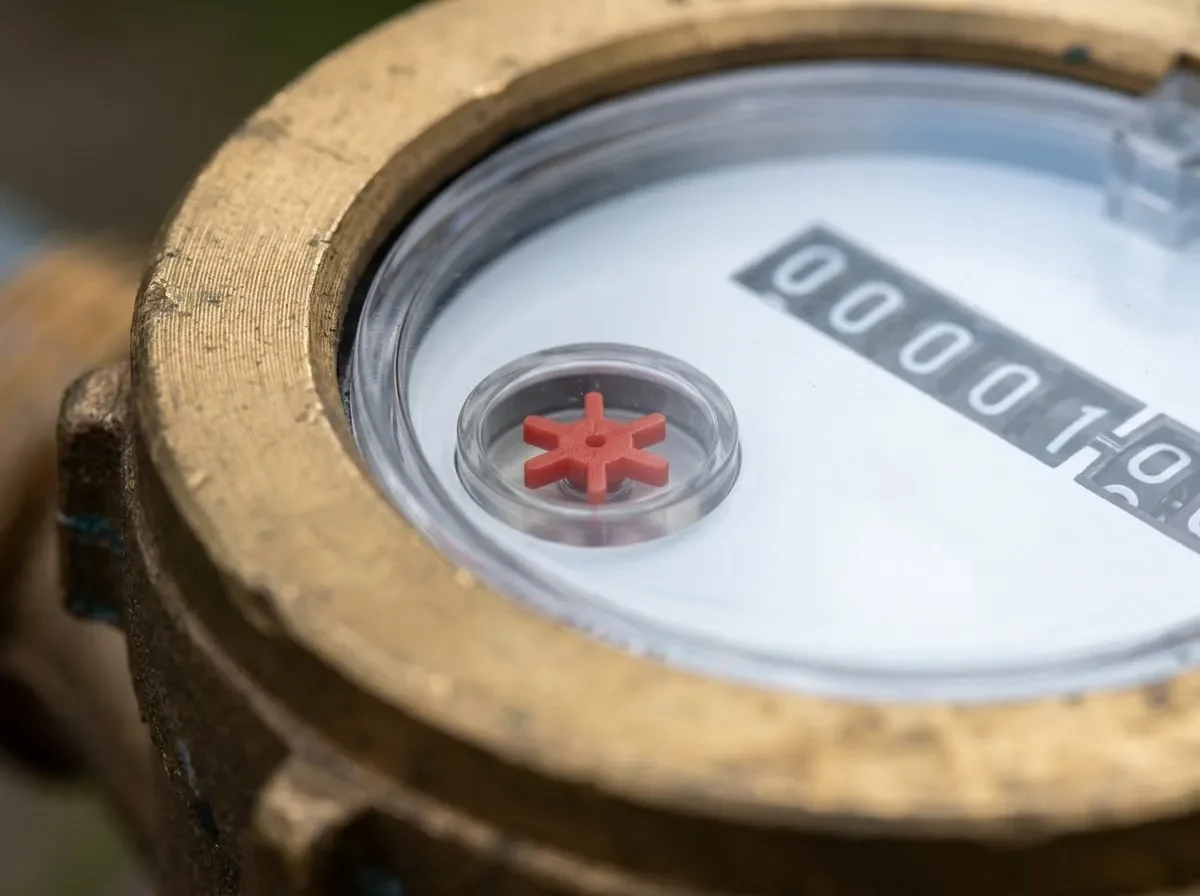
Some meters have a separate flow indicator; its shape and sensitivity depend on the model.
What does your result mean?
| Result | Possible meaning | Next check |
|---|---|---|
| Indicator keeps moving | Water may still be passing through the meter. Unnoticed use or a leak are possibilities—not a confirmed location. | Check toilets, irrigation and automatic filling; confirm the supply is not shared. |
| Reading increases | The metered supply registered consumption during the interval. The amount alone does not identify the source. | Confirm no one used water; save both photos and times, then investigate ongoing unexplained use. |
| Reading appears unchanged | No measurable change was seen during this test. Very small or intermittent use may not show. | Repeat under suitable conditions if needed; investigate persistent dampness separately. |
| Movement is intermittent | A periodic refill, automatic system, intermittent leak or display behaviour may be involved. | Record when movement happens and compare it with appliance, cistern and tank activity. |
| Consumption persists, source unknown | A concealed or underground supply leak remains one possible explanation after known uses are checked. | Arrange a plumbing assessment; do not dig or open walls based only on the reading. |
A simple reading example
If a meter explicitly reads in m³, an illustrative change from 123.456 m³ to 123.466 m³ is 0.010 m³, or 10 litres. Over this example’s 30-minute test, that is recorded consumption—not a confirmed leak rate or a forecast of your bill. These invented example readings are not taken from the illustrations.
Check a toilet that keeps refilling
A cistern can lose water into the bowl without making a puddle on the floor. Its fill valve may then replenish that water continuously or in short bursts. After normal post-flush refilling finishes, listen for ongoing filling and look for a trickle in the bowl without flushing again.
Only look inside the cistern if its lid is easy and safe to lift; some lids are connected to a flush control or are heavy. Do not dismantle the mechanism, force an isolation valve or adjust unfamiliar parts as part of this test. A raised float, worn seal or fill-valve fault needs assessment rather than a guess from the meter.
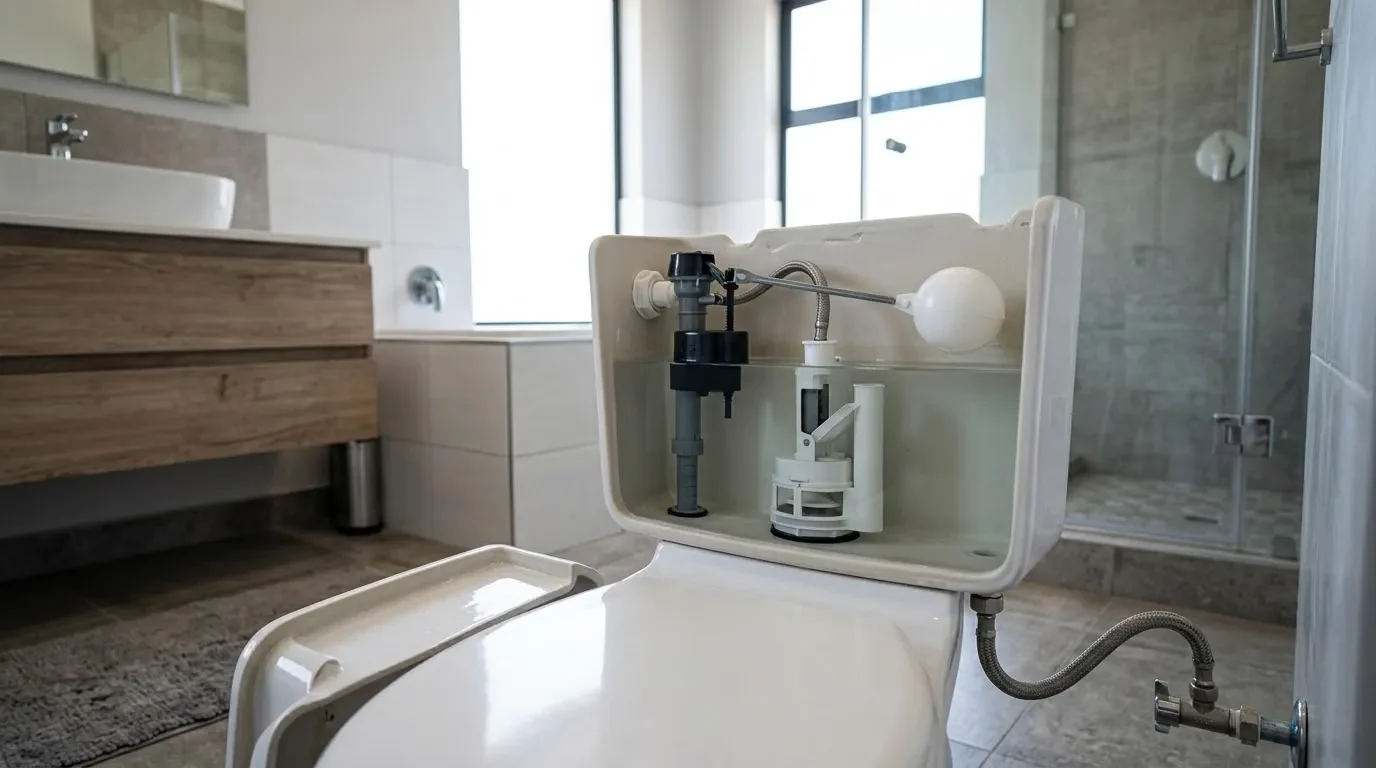
For the differences between cistern faults and appropriate repair options, see running toilet repairs and refilling symptoms.
When the source is still unclear
Recheck irrigation schedules, tank and pool refilling, appliances and any shared supply before assuming a buried pipe has failed. Note whether consumption happens continuously or at particular times. At an estate or complex, involve the managing agent when common-area plumbing or other homes may be included.
If unexplained consumption persists, save the meter photos and times, describe any dampness or pressure changes, and explain your supply arrangement. A plumber can assess those clues and decide whether fixture checks, supply testing or further investigation is appropriate. Specialist equipment and access requirements depend on the actual situation; no method finds every leak or guarantees an untouched finish.
Read about leak detection assessments and plumbing leak repairs. For fast, visible water escape, use burst-pipe repair guidance instead of waiting through an observation interval.
Discuss an assessment in Durbanville or nearby Bellville
Any investigation or repair is quoted clearly for your approval first, with clear written quotations and work approved before proceeding.
Water-meter leak-check questions
Can a water meter detect a hidden leak?
It can help reveal unexplained consumption on the supply it measures. When known uses are stopped and the reading still rises, a leak is one possibility. The meter cannot locate the fault, distinguish every source of consumption or detect all drainage and waterproofing problems.
How long should I watch my water meter?
The City’s published guide uses a 15-minute comparison. A longer 30–60 minute observation may help reveal a smaller change when you can safely keep water use stopped. There is no universal test duration: meter resolution, update behaviour, automatic systems and intermittent faults affect what you can observe.
What if my meter moves when all taps are off?
Check more than taps. Toilets, irrigation, tank refilling, pool top-ups and a shared supply may still consume water. If movement remains unexplained after those checks, record your observations and arrange an assessment. Movement alone does not prove a burst underground pipe.
Can a leaking toilet make the meter move?
Yes. Water escaping from a cistern into the bowl can cause the fill valve to replenish it continuously or intermittently. Allow normal refilling after a flush to finish, then listen for ongoing filling and look for a bowl trickle. Do not force valves or dismantle the cistern to complete this test.
What if the meter is stationary but I still suspect a leak?
A short test may miss an intermittent or very small supply leak. Dampness may also relate to wastewater pipework, rain ingress or waterproofing rather than fresh-water consumption. Keep a record of when the moisture appears and seek an assessment if it persists.
Can I check without opening walls or digging?
This initial test is observational and does not require opening finishes or excavating. It is not a promise that a professional investigation or repair will avoid access work. The appropriate next method depends on the evidence, pipe routes and site conditions.
Source and scope
The 15-minute starting comparison is described in City of Cape Town — How the City manages leaks and burst pipes (2018), section 2. The document is dated 2018; it is cited for its observational test, not as a statement of current tariffs, repair response times or every property’s legal responsibility. Check the instructions for your meter and confirm municipal or shared-property responsibilities for your installation.