01
Recurring blockages
A drain that blocks again soon after clearing often points to a problem further along the line rather than in the fixture trap. The pattern is investigated before the same blockage is cleared repeatedly.
Emergency & Leak Finding
Geyser & Hot Water
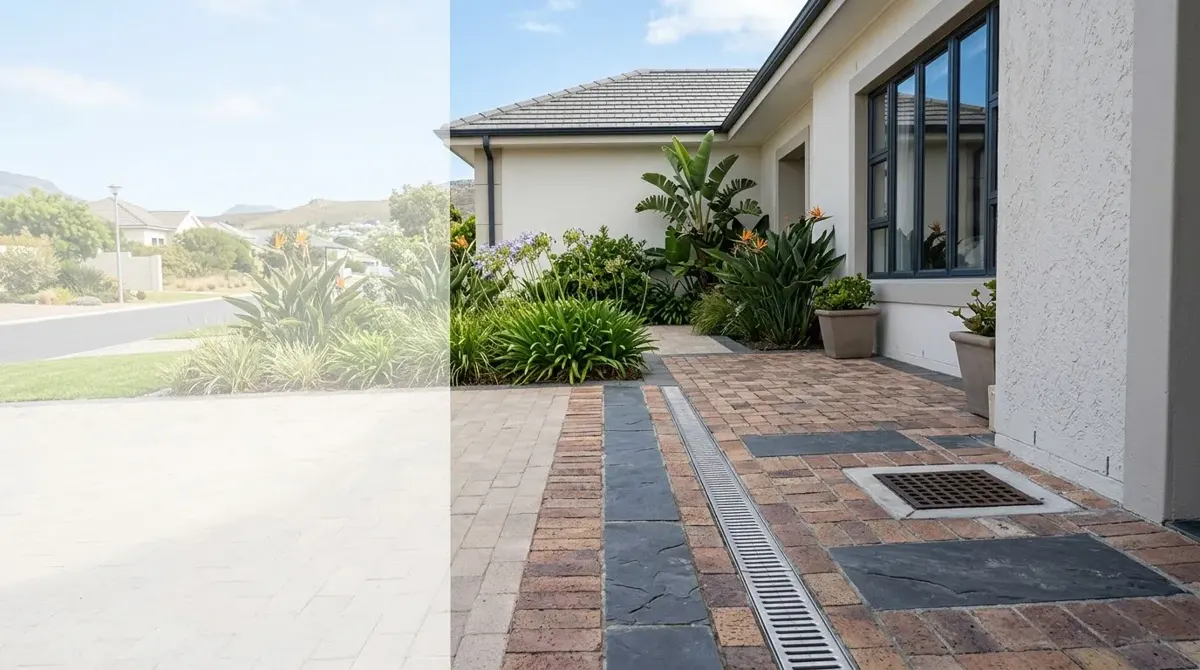
Drainage problems, blockages and investigations.
Recurring blockages, sewer smells and water that pools after rain usually have a cause further along the line. The Cape Town Plumber (Pty) Ltd investigates sewer and drainage problems in Durbanville homes and quotes the repair in writing before work starts.
Professional workmanship · Clear written quotations · Work approved before proceeding
01 — Common problems
01
A drain that blocks again soon after clearing often points to a problem further along the line rather than in the fixture trap. The pattern is investigated before the same blockage is cleared repeatedly.
02
When basins, showers and toilets slow down together, the shared drainage line is a likely place to look. One slow fixture usually has a more local cause.
03
Persistent odours can come from dry traps, damaged seals, venting issues or a defect in the drainage. The source is checked rather than masked.
04
Water backing up outside points to a restriction downstream. Avoid contact with sewage and keep children and pets away.
05
Rainwater that collects at paving, doorways or walls may need a channel drain, regrading of a drainage run or clearing of an existing outlet. Stormwater must not be connected into the sewer.
06
Roots, ground movement and old joints can damage underground drainage. Where the line is concealed, further investigation may be needed before the scope is clear.
A single blocked toilet, sink or shower? Our blocked drains page covers fixture-level blockages.
Blocked drains and toilets →02 — What to do now
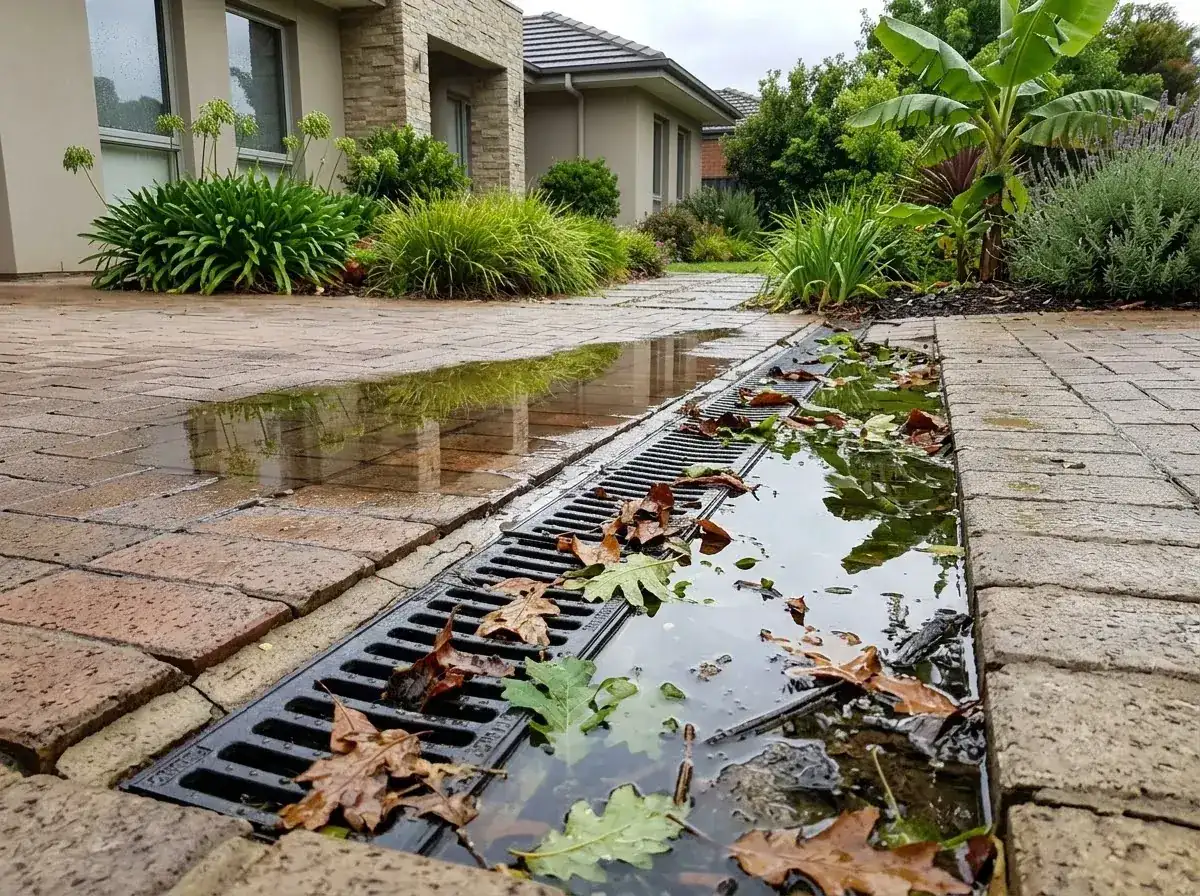
Stop using fixtures that drain into the affected line until the cause is known.
Avoid contact with sewage; wash hands and surfaces that were exposed.
Do not open sealed sewer access points or enter excavations or manholes.
Do not pour harsh chemicals into a blocked drain; they can harm pipes and people clearing the line.
Keep away from water near electrical equipment.
If a municipal sewer appears to be overflowing in the street, report it to the City of Cape Town.
03 — Stormwater drainage
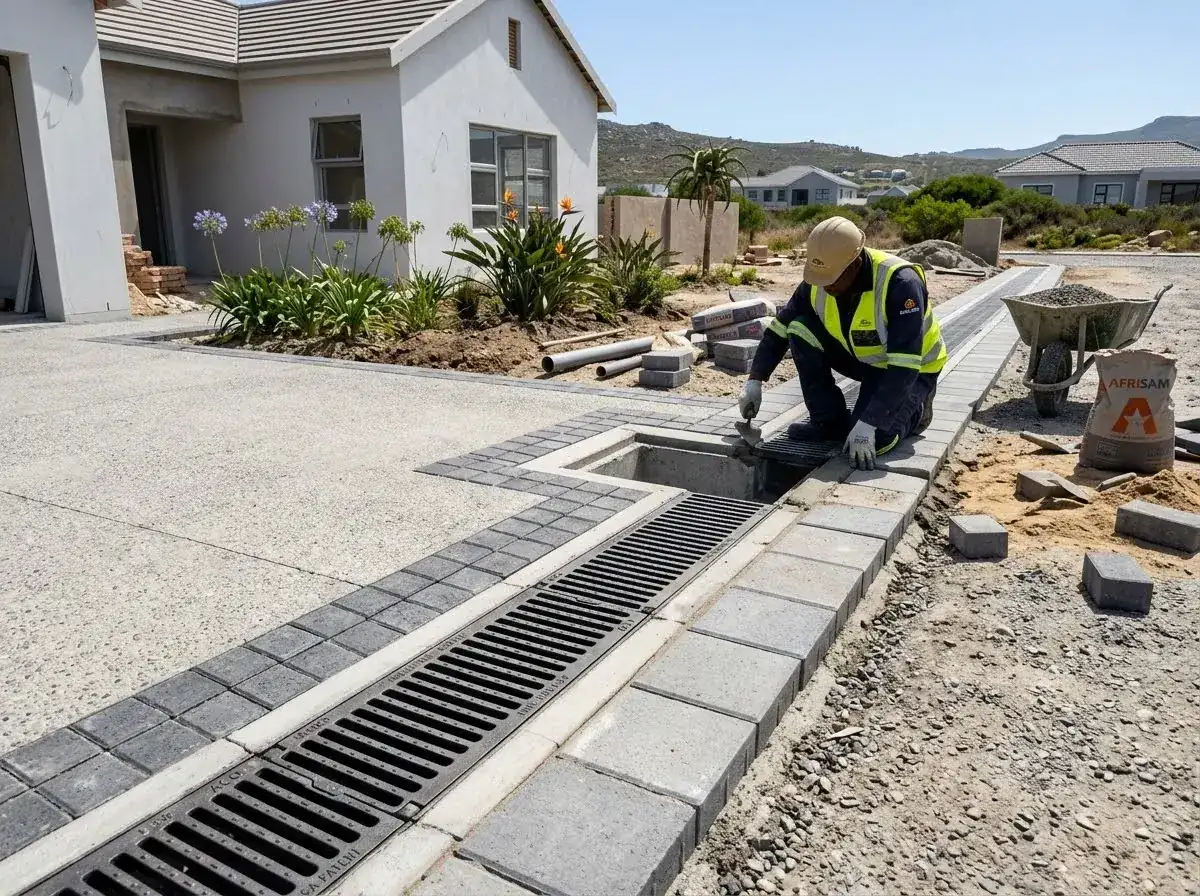
Water that pools against walls, at doorways or across paving may need a channel drain, a new underground run or clearing of an existing outlet. The route, falls and the outlet point decide what is practical.
Stormwater must be kept separate from the sewer. Where paving, excavation or making good is involved, that is set out in the quotation.
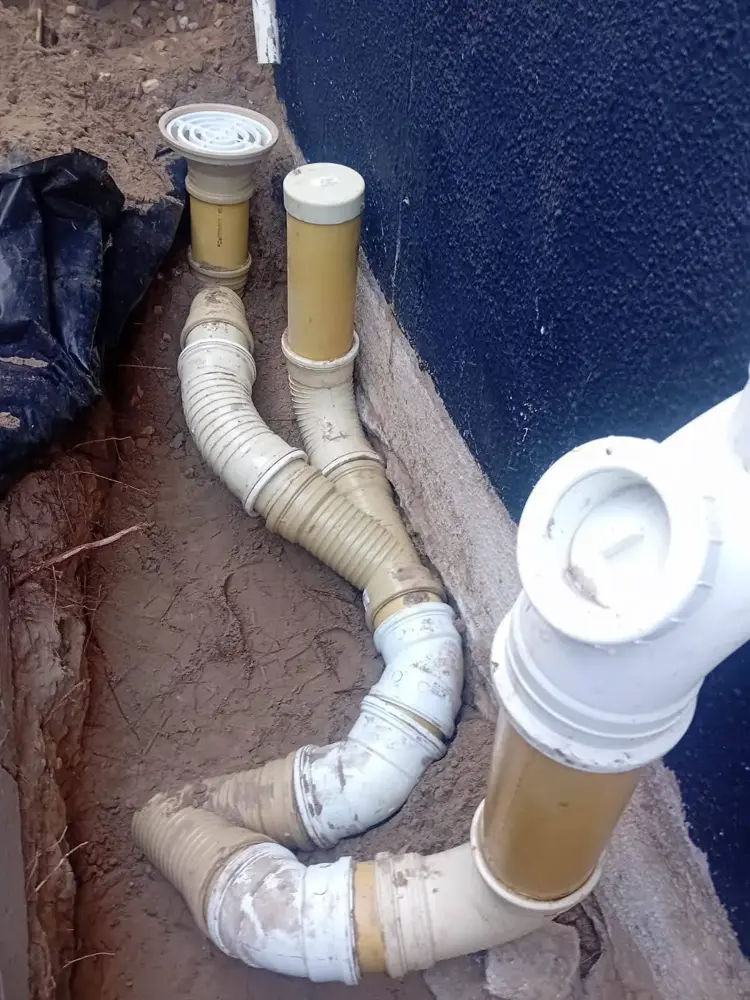
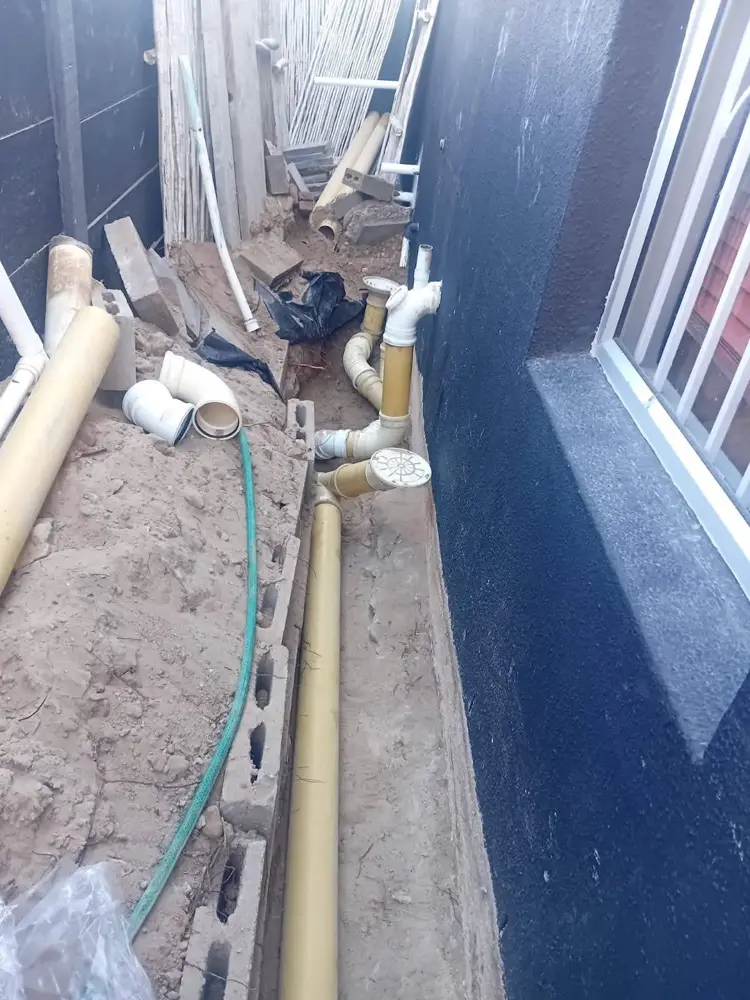
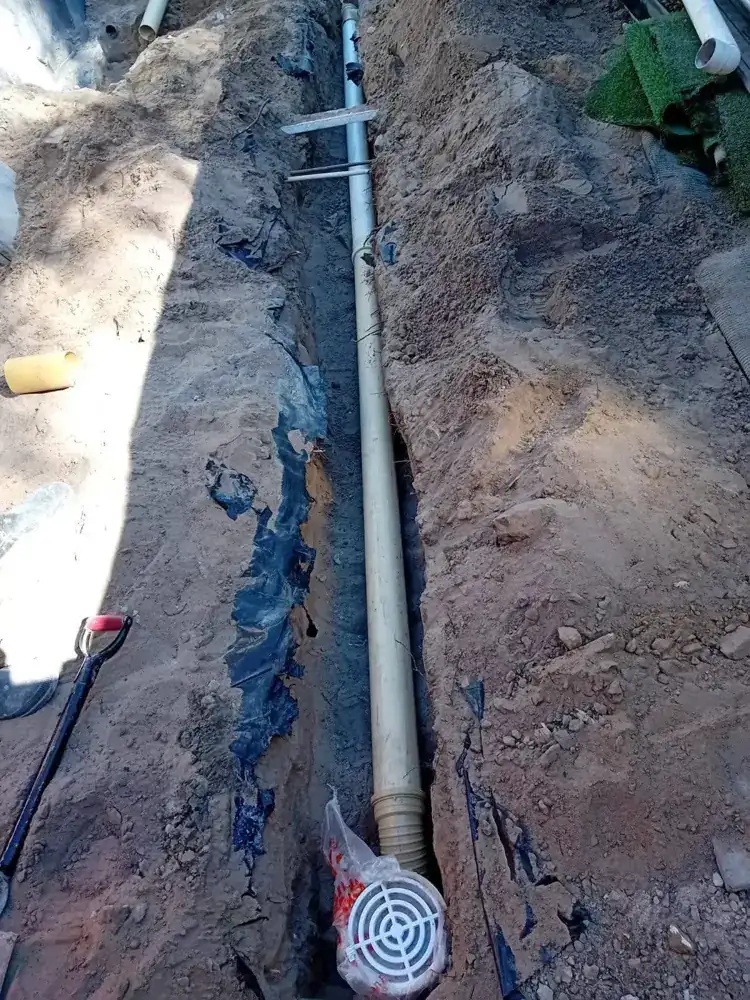
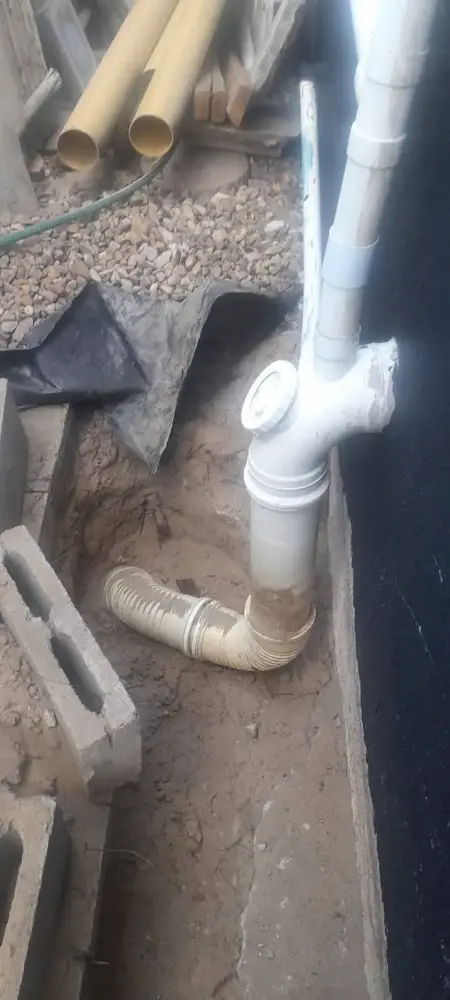
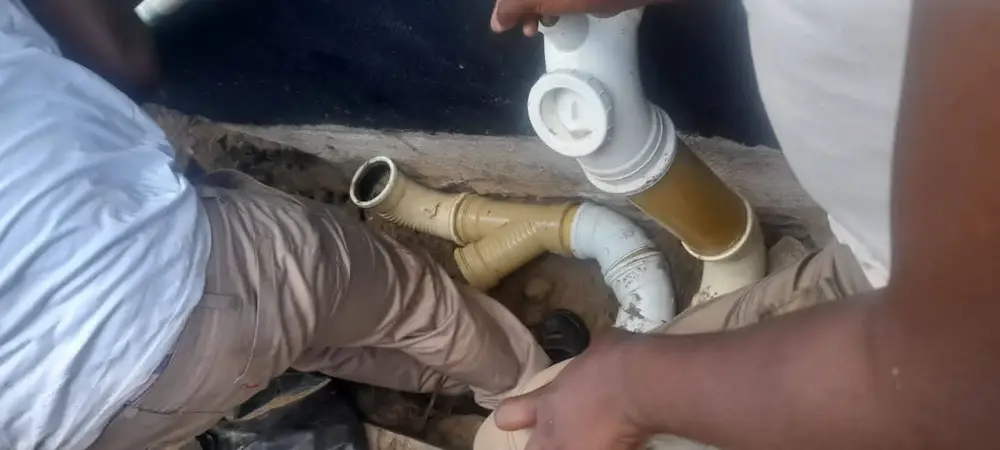
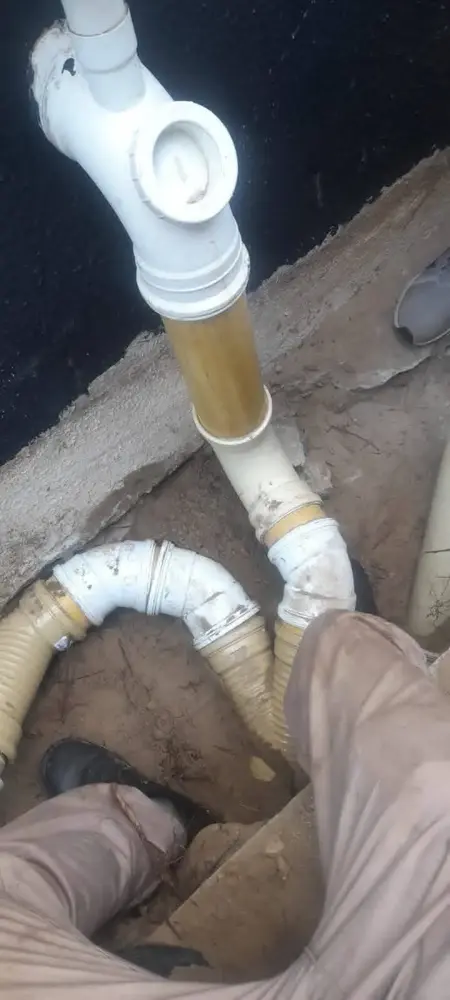
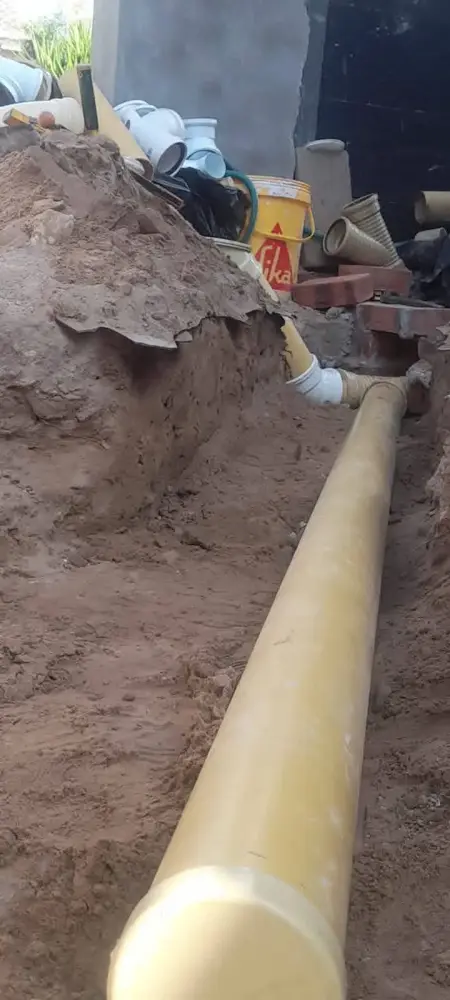
04 — Real project photos
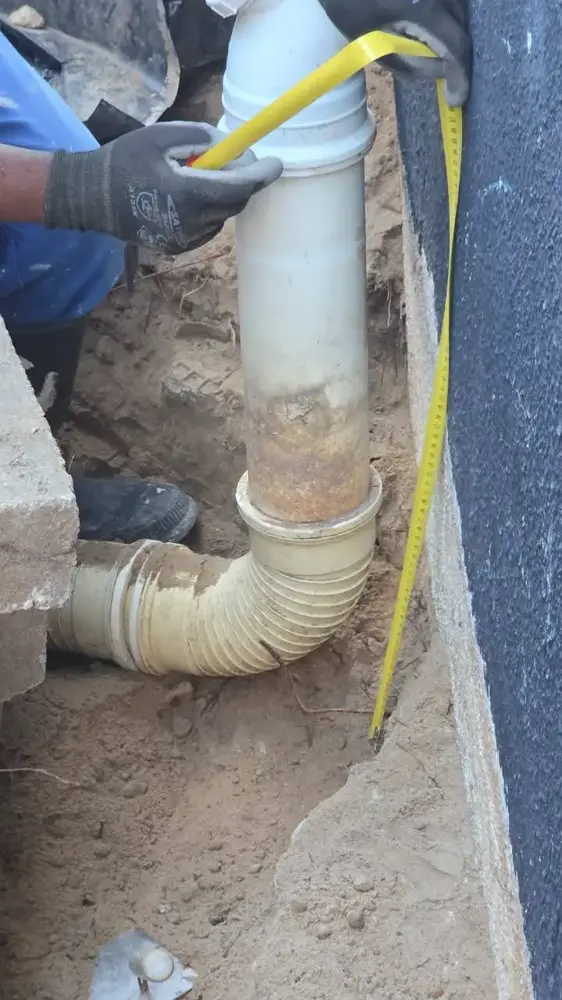
Genuine photos from one of our storm drain jobs. The captions describe only what the photos show; they are not a claim about the location, specifications or outcome of this or any other job.
05 — How it works
Tell us which fixtures are affected, when it started, whether it has happened before and your suburb. A photo helps.
Attendance depends on location and availability. Call-out details are confirmed with you directly by phone or WhatsApp.
Accessible points are checked to establish where the problem sits. Concealed lines may need further investigation, explained before it is done.
Findings, options and costs are set out in writing. Additional work needs a revised quotation and your approval.
06 — Clear pricing
Quoted first
Clear written quotation before any work begins.
Drainage prices depend on access, depth, excavation, materials and what the investigation finds, so a fixed price cannot be promised beforehand.
Additional work requires a revised quotation and your approval. Paving and making good are clarified in the quotation.
07 — FAQ
A blocked drain usually affects one fixture or a short branch, such as a sink or shower. A sewer or main drainage problem often affects several fixtures, an outside gully or a manhole. The pattern of which fixtures are affected helps decide where to investigate first. Neither is confirmed until the line has been checked.
Repeated blockages can come from build-up in the line, items that should not be flushed, roots, a sag or a damaged joint. Clearing removes the blockage but may not address why it returns. Note how often it happens and which fixtures are affected so the investigation can focus on the right section.
Possible sources include a dry trap in an unused fixture, a failed seal, venting problems or a drainage defect. Run water in rarely used fixtures first. If the smell continues, an assessment can check traps, seals and accessible drainage rather than masking the odour.
Stormwater drainage, such as channel drains and underground runs that carry rainwater away from paving and walls, can be assessed and quoted. Stormwater should not discharge into the sewer. The route, falls, outlet and site conditions determine what is practical.
Drainage inside your property boundary is usually the owner's responsibility, while the municipal sewer is the City's. If sewage is overflowing from a municipal manhole in the street, report it to the City of Cape Town. If the overflow is on your property, stop using fixtures and arrange an assessment.
Repairs, clearing and installation are quoted in writing according to the findings, access, excavation and materials, and additional work requires a revised quotation and your approval.
Harsh chemicals rarely solve a blockage further down the line and can damage pipes or harm whoever clears the drain later. If you have already used one, say so when you call. Stop using the affected fixtures and arrange an assessment instead.
Prefer a call back?
If sewage is backing up inside the house, stop using water and call us directly. For slow drains or a smelly gully in Durbanville, Kraaifontein or Bellville, leave your number and we'll phone you back.
08 — Contact
Durbanville and surrounding Northern Suburbs. Share your suburb, the affected fixtures and a photo; call if sewage is overflowing.
Take a photo or short video of the leak, geyser, toilet or fitting and WhatsApp it to 079 291 7407 with your suburb. We will look at it and tell you the next safe step.