Running Toilet Repairs in Durbanville.
A toilet that keeps running, trickles into the bowl or refills on its own is wasting water every hour it is left. The cause is almost always inside the cistern, but similar symptoms come from different parts. The Cape Town Plumber assesses running toilets for homeowners in Durbanville and the Northern Suburbs, then explains the repair before any work is done.
Professional workmanship · Clear written quotations · Work approved before proceeding · Rated 4.9★ from 44 Google reviews
01 — How a cistern works
Why a toilet runs at all.
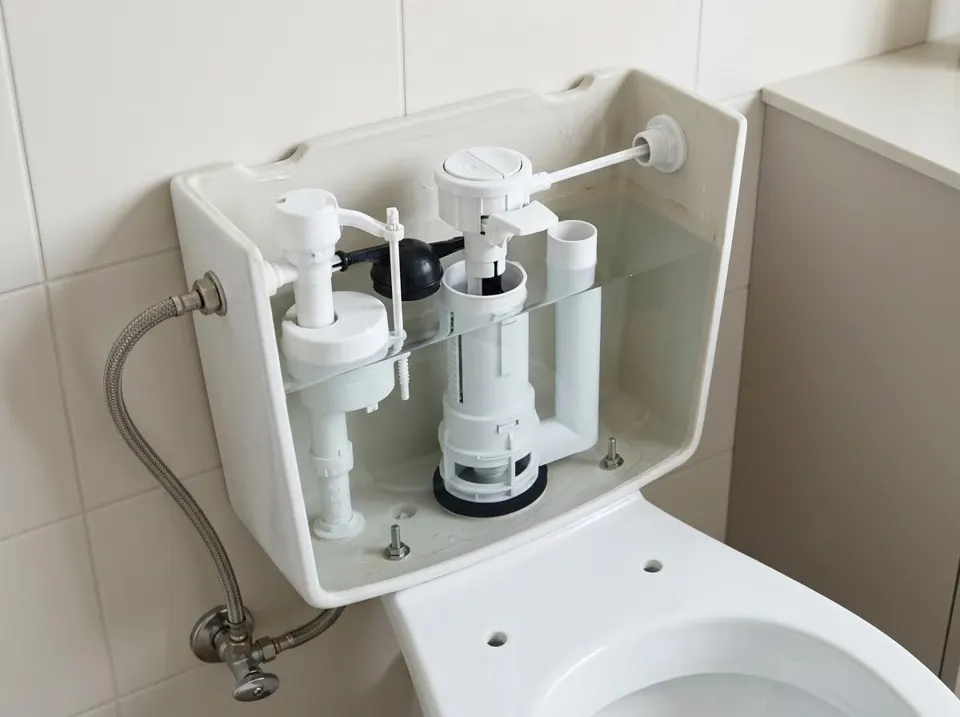
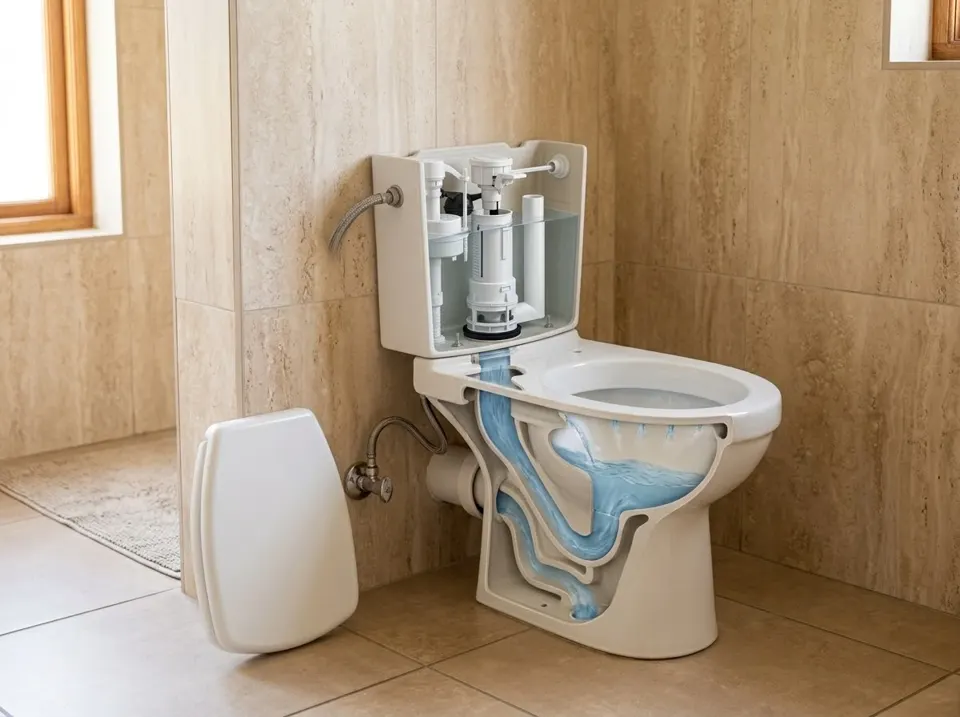
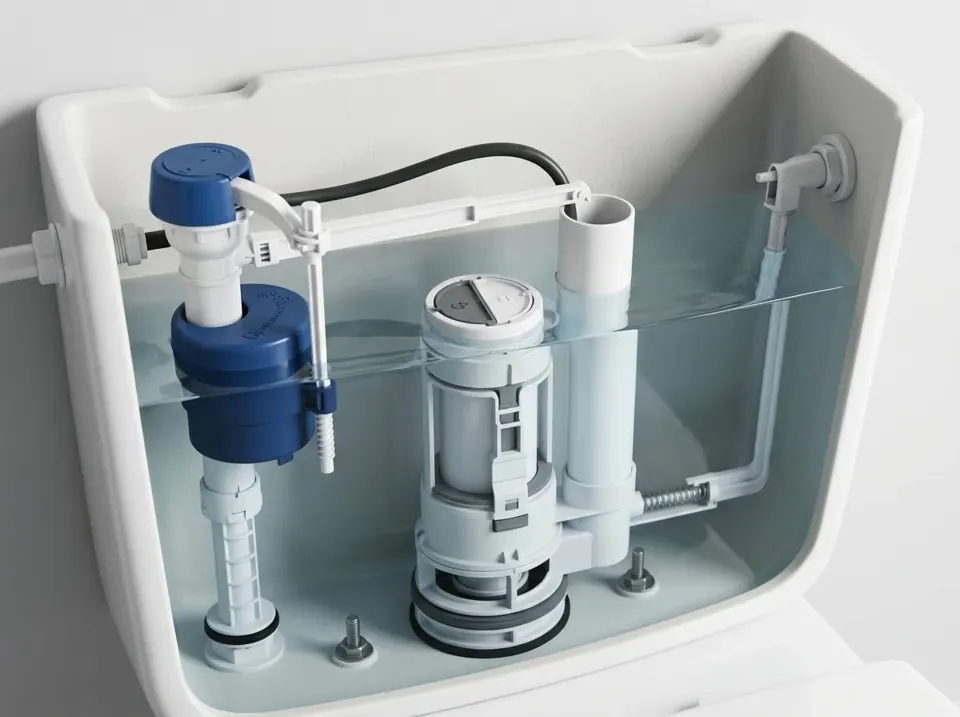
After a flush, the flush valve at the bottom of the cistern lets water into the bowl and then reseals. The fill valve refills the cistern and its float tells it when to stop. An overflow tube carries excess water into the bowl if the level rises too high.
A running toilet means one of these steps is not finishing: water is still getting out past the flush valve, still coming in through the fill valve, or spilling over the overflow.
02 — Symptom guide
What your running toilet may be telling you.
These are common possibilities, not a diagnosis. The cistern needs to be inspected to confirm which part is at fault.
| What you notice | What it looks like | Possible reason | Area to check |
|---|---|---|---|
| Water trickles into the bowl | You can see or hear water moving into the pan long after the flush has finished. | Water may be passing the flush valve seal, or the cistern may be filling high enough to spill into the overflow. | Flush valve or water level |
| The cistern refills on its own | The toilet tops itself up every so often when nobody has used it. | Water is usually escaping from the cistern slowly, so the fill valve keeps replacing it. | Flush valve seal |
| A constant hiss or filling sound | The inlet never goes quiet and water keeps entering the cistern. | The fill valve may not be shutting off, or the float may be set or moving incorrectly. | Fill valve or float |
| Water reaches the overflow tube | The water level sits at or above the top of the overflow inside the cistern. | The fill level is too high or the fill valve is not closing at the right level. | Fill valve setting |
| It runs only after some flushes | The toilet behaves normally sometimes and keeps running at other times. | The button, lever or linkage may not be returning fully, so the flush valve does not reseat. | Flush control |
Swipe the table sideways to see every column.
03 — Safe first steps
What you can safely do now.
- 01
Watch and listen
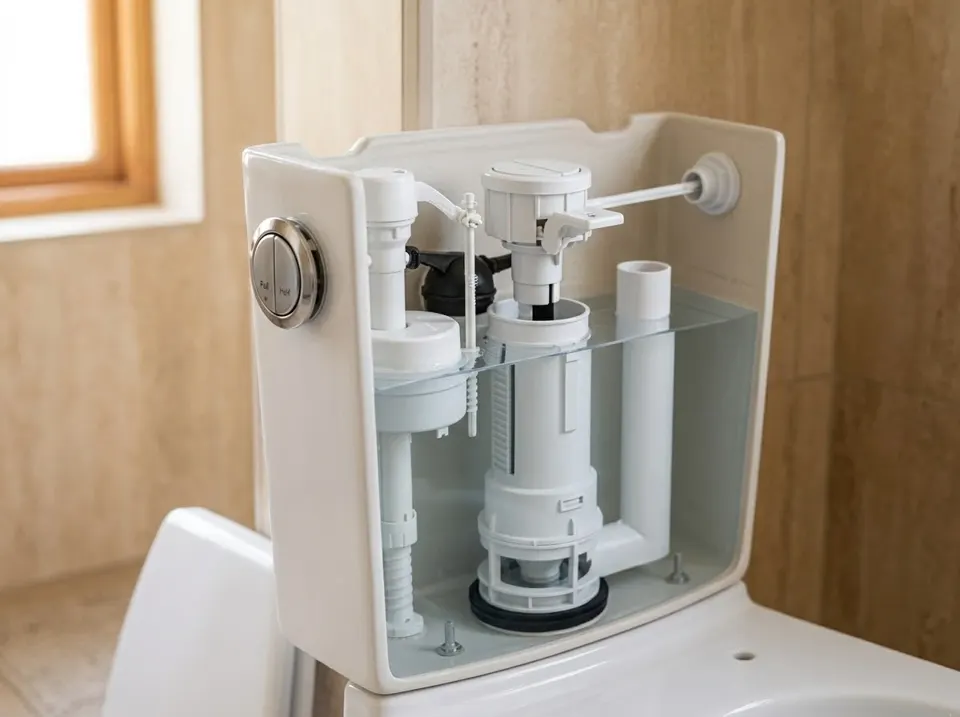
After a flush, note whether water keeps entering the cistern or keeps moving into the bowl. This helps you describe the fault; it does not prove which part has failed.
- 02
Look inside only if the lid lifts off easily
If the cistern lid is designed to lift off, see whether the water level reaches the top of the overflow tube. Observe only — do not bend, adjust or unclip parts.
- 03
Stop the water if you need to
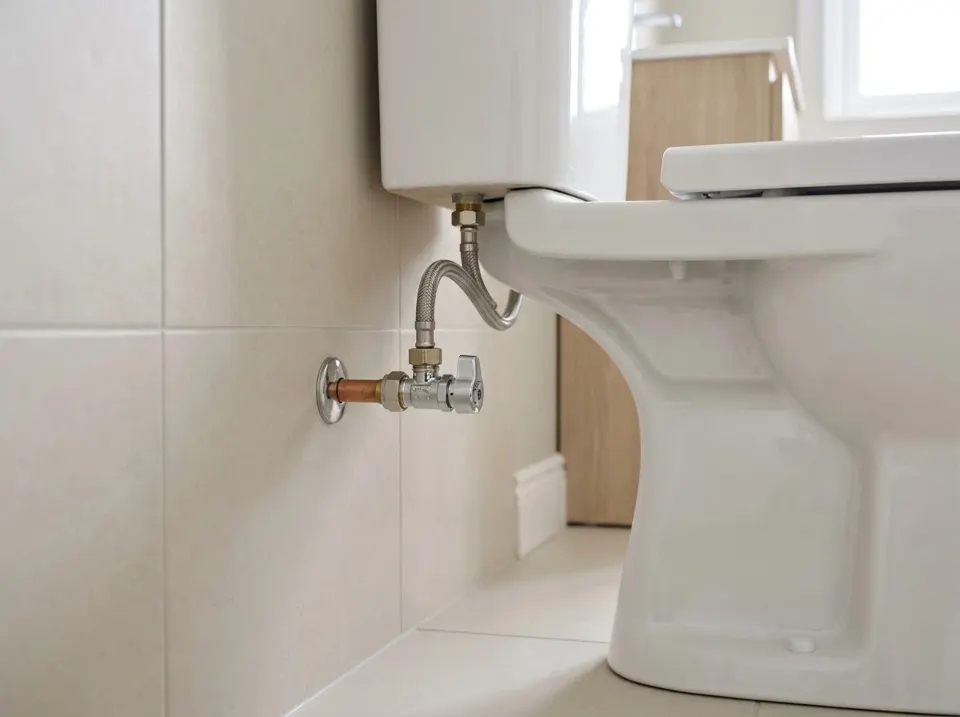
If an accessible isolation valve works freely, turn it off gently. Do not force a stiff, corroded or damaged valve; it can break and turn a running toilet into an active leak.
- 04
Do not buy parts yet
Different faults look and sound alike. A replacement bought before the mechanism has been identified may not suit the toilet or fix the cause.
- Water escaping onto the floor or the toilet overflowing? Stop using it and see our emergency plumbing guidance.
04 — Repair or replace
Most running toilets need a part, not a new toilet.
Usually a repair
- A worn flush valve seal
- A fill valve that no longer shuts off
- A fill level set too high
- A sticking button, lever or linkage
- A worn supply connector or isolation valve
Replacement may be worth considering
- Cracked cistern or pan ceramics
- Parts for the mechanism are no longer practical to source
- Faults that keep returning after repairs
- You want a different toilet anyway
Thinking about a new suite? Read toilet replacement. Meter moving with everything off? See leak detection and repairs. Other toilet faults? See toilet repairs.
05 — Pricing
Assessed first, priced before work.
Call-out details are confirmed with you directly by phone or WhatsApp. After the running toilet is assessed, the repair is explained and priced for your approval before it goes ahead, with professional workmanship and suitable replacement parts.
06 — Service area
We are a mobile plumbing service — a plumber comes to your home; we do not run a walk-in office in Durbanville. We attend running toilets across Durbanville and nearby Northern Suburbs such as Sonstraal Heights, Kenridge, Eversdal, Aurora and Durbanville Hills. See every area on our Durbanville service area page.
07 — Questions
Running toilet questions.
Why does my toilet keep running after I flush?
A toilet that keeps running after the flush usually means water is either still entering the cistern or still leaving it. Common causes are a fill valve that is not shutting off, a float set or moving so that the valve never closes, a water level high enough to spill into the overflow tube, or a flush valve seal that is not sealing against its seat. A button or lever that does not return fully can also hold the flush valve open. These faults can sound almost identical from outside the cistern, so the mechanism needs to be inspected before a part is replaced. If an accessible isolation valve works freely, you can turn it off gently to stop the water until then.
Why does my toilet refill by itself when nobody has used it?
When a cistern refills on its own, water is normally escaping from it slowly, most often past the flush valve seal and into the bowl. As the level drops, the fill valve opens to top it up, then closes again, which is why you may hear a short burst of filling every so often. Water spilling into the overflow tube can cause a similar pattern. Because both look alike from outside, the cistern is checked to see where the water is going. Fitting a new fill valve when the real problem is a worn flush valve seal will not stop the refilling, which is why we assess the toilet before recommending a repair.
Is a running toilet urgent?
A running toilet is not usually an emergency in the way a burst pipe or overflowing toilet is, but it should not be left indefinitely. Water keeps passing through the cistern day and night until the cause is corrected, and a slow trickle into the bowl is easy to overlook. It becomes more urgent if water is escaping from the cistern onto the floor, the toilet is overflowing, or the isolation valve cannot be closed. If the toilet can be isolated safely at an accessible valve, turning the supply off gently will stop the flow until the toilet can be assessed. Do not force a stiff or damaged valve to do this.
Can I fix a running toilet myself?
Safe checks are fine: watching and listening after a flush, looking into a cistern whose lid lifts off easily, and gently closing a working isolation valve. Beyond that, take care. Cistern mechanisms differ between brands and models, parts may be held by clips or seals that are easy to damage, and a replacement bought before the fault is identified may not fit or may not solve the problem. Forcing a stiff valve or overtightening a connection can create a leak that is worse than the running toilet. If you are unsure what you are looking at, it is better to stop and arrange an assessment than to dismantle the mechanism.
Will a running toilet show up on my water meter?
It can. A toilet that is continuously running or refilling uses water even when nobody is using any taps, so the meter may continue to move when the home is otherwise quiet. Our leak detection page explains how to read your meter safely to check for water use when everything should be off. A moving meter does not prove the toilet is the cause, though: other leaks on the property can produce the same result. Isolating the toilet at its valve and checking the meter again can help narrow it down, provided the valve operates freely and you do not force it.
Does a running toilet mean I need a new toilet?
Usually not. Most running toilets are caused by a component inside the cistern, such as the flush valve seal, the fill valve or float, or the flush button and linkage, and these can often be repaired or replaced on their own. A new toilet becomes worth considering when the cistern or pan ceramics are cracked, parts for the mechanism are no longer practical to source, the same fault keeps returning, or you want a different toilet anyway. We do not decide this from a description. The toilet is assessed first, and both options and their pricing are explained so you can choose.
How much does it cost to repair a running toilet in Durbanville?
There is no honest fixed price before the toilet has been seen, because the cost depends on which part has failed, the make of mechanism and whether a suitable replacement is available. After assessing the toilet, we explain what we found, what we recommend and the applicable pricing, and no repair goes ahead until you approve it. If the toilet turns out to need replacing rather than repairing, we will explain that too.
Do you repair running toilets in Durbanville and nearby suburbs?
Yes. The Cape Town Plumber is a mobile plumbing service attending homes in Durbanville and the surrounding Northern Suburbs, including Sonstraal Heights, Uitzicht, Kenridge, Eversdal, Aurora, Vierlanden, Pinehurst, Durbanville Hills and the other areas listed on our Durbanville page. We do not operate a walk-in office in Durbanville; a plumber comes to you. Call or send a WhatsApp message to 079 291 7407 describing what the toilet is doing. A short video of the cistern taken safely, with the sound on, can help us understand the problem before the assessment.
Toilet still running in Durbanville?
Send a short video of the cistern with the sound on, or call us, and we will arrange an assessment. We also attend running toilets in nearby Bellville and Tyger Valley.
Rated 4.9★ from 44 Google reviews · View our Google profile