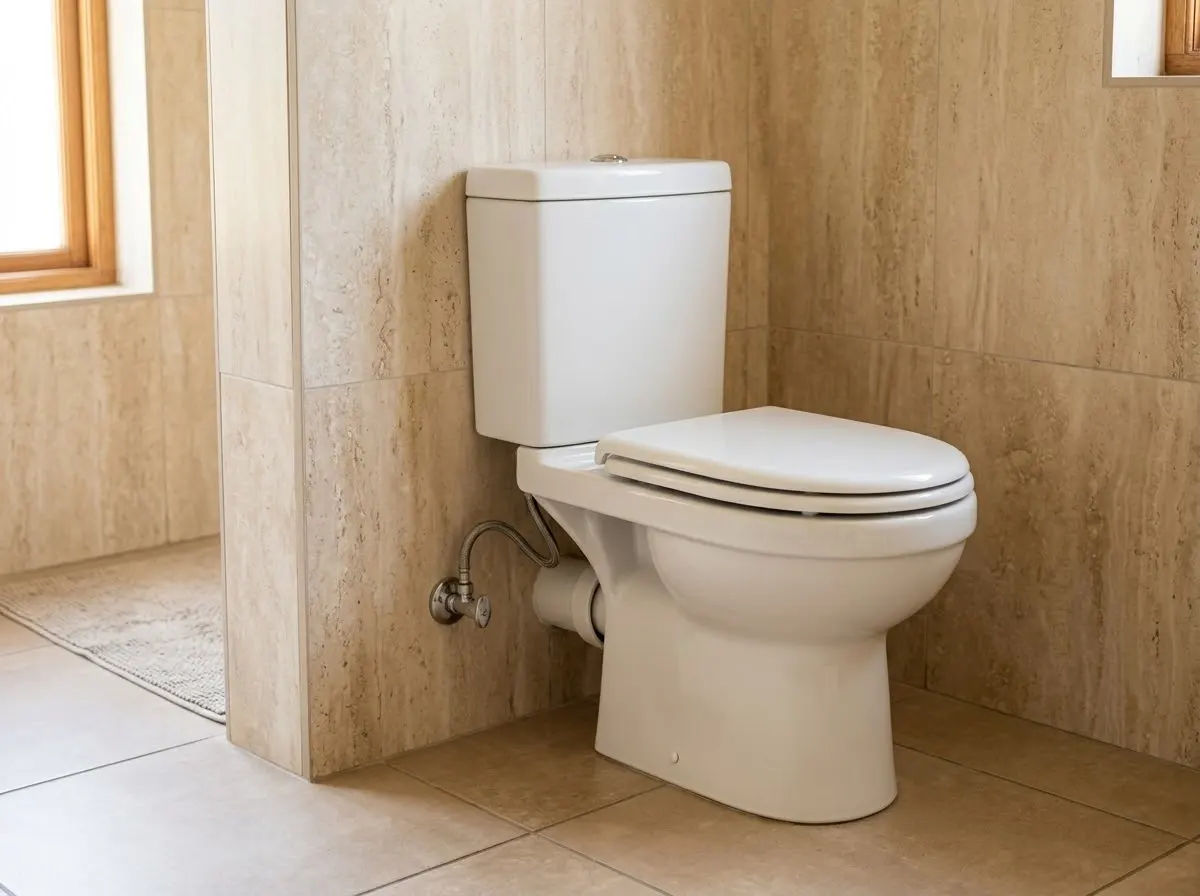
Toilet Replacement in Durbanville.
Replacing a toilet is more than swapping one suite for another. The new pan has to suit your existing waste outlet, water supply and space. The Cape Town Plumber assesses these first, then removes the old toilet and installs the new one for homeowners in Durbanville and the surrounding Northern Suburbs.
Professional workmanship · Clear written quotations · Work approved before proceeding · Rated 4.9★ from 44 Google reviews
01 — Repair or replace
Do you need a new toilet at all?
Many toilet faults are fixed by replacing one component, not the whole toilet. Replacement is worth considering when the ceramics are damaged, faults keep returning or you want a different suite.
Repair is often enough when
- A single component such as the fill valve, flush valve, button or supply connector has failed
- The pan and cistern ceramics are sound with no cracks
- Replacement parts for that mechanism are still practical to obtain
- You are happy with the toilet as it is
Replacement may make more sense when
- The pan or cistern ceramic is cracked or chipped through the glaze
- The same faults keep returning after repairs
- Parts for an older mechanism are no longer practical to source
- You are renovating or simply want a different style of toilet
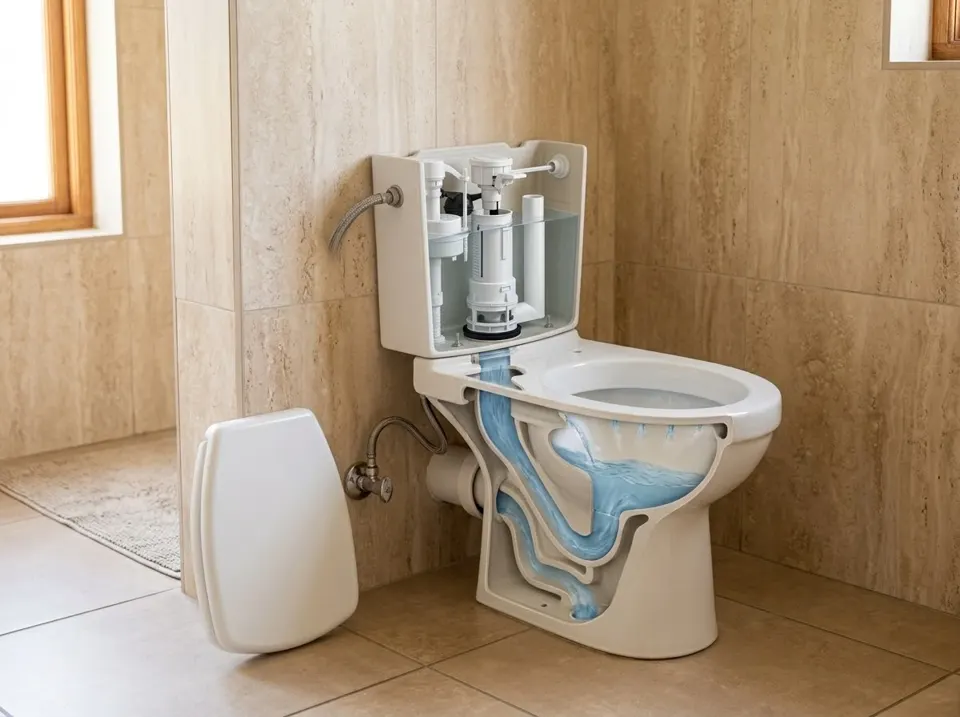
Running, leaking or not flushing? Start with our toilet repairs guide — a repair may be all you need.
02 — Will it fit?
What we check before a new toilet is chosen.
The most common replacement problem is a new toilet that does not line up with the existing drainage. These checks happen on site, before you commit to a suite.
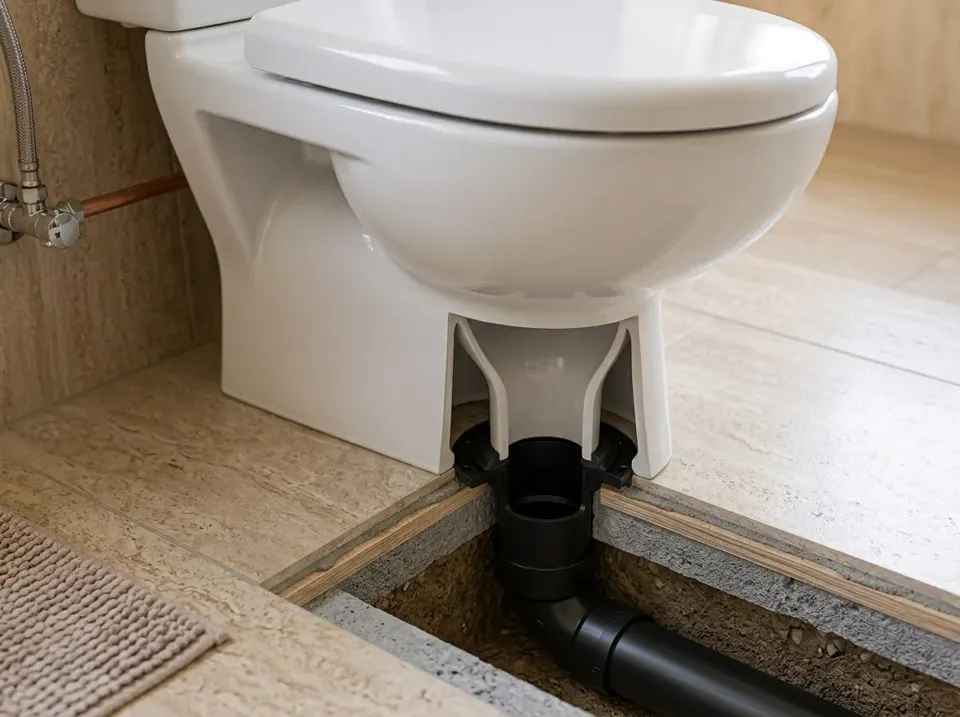
- Waste outlet direction
- Whether the existing pan discharges into the floor or into the wall determines which new pans can connect without altering the drainage.
- Outlet position
- The distance from the wall to the centre of a floor outlet varies between homes. It is measured on site, because a pan that does not suit it may need an offset connector or drainage changes.
- Water supply and isolation
- The position and condition of the supply pipe and isolation valve affect whether they can be reused or should be replaced at the same time.
- Floor condition
- The floor beneath the old pan is checked once it is removed. Damage from a long-standing leak is noted and explained before the new toilet is fitted.
- Space and access
- The new suite must fit the room, leave the door and nearby fixtures usable, and allow access to the cistern for future servicing.
03 — Choosing a toilet
Common toilet types compared.
| Type | How it is built | Suits | Consider |
|---|---|---|---|
| Close-coupled | Cistern sits directly on the back of the pan | Most common in homes; straightforward to replace like-for-like | Footprint and outlet position must suit the existing waste |
| Back-to-wall | Pan sits flush to the wall; cistern concealed in a unit or wall | Cleaner look with hidden pipework | Access to the concealed cistern must be planned for future servicing |
| Wall-hung | Pan mounted on a wall frame; cistern concealed in the wall | Clear floor for cleaning; modern appearance | Usually needs wall work and a suitable frame, so it is often a renovation job |
Swipe the table sideways to see every column.
04 — Water use
Flush volume and Cape Town water rules.
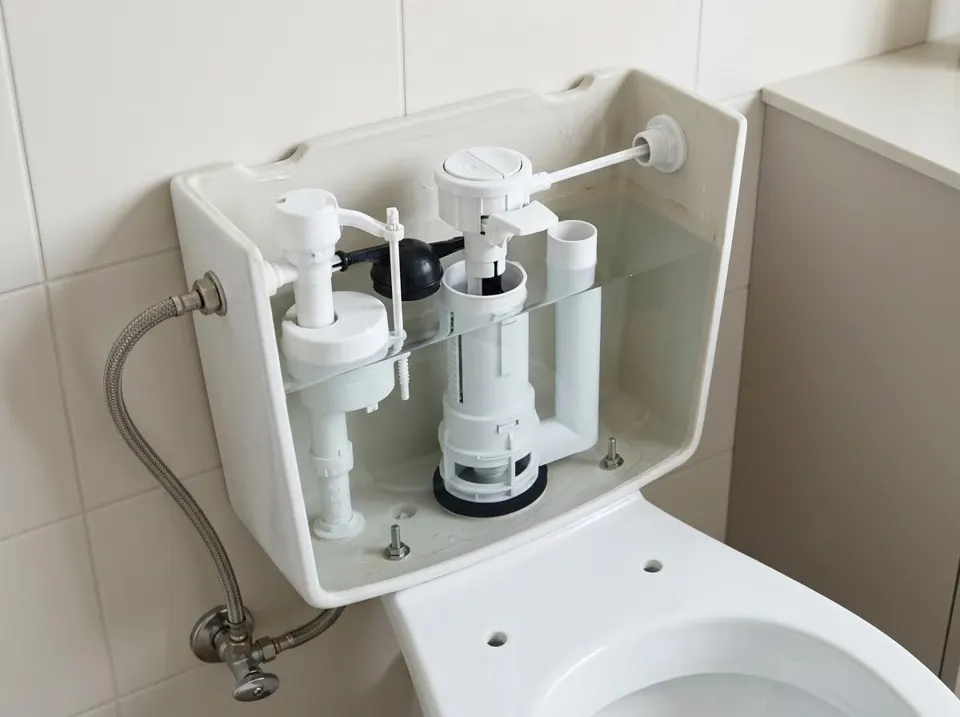
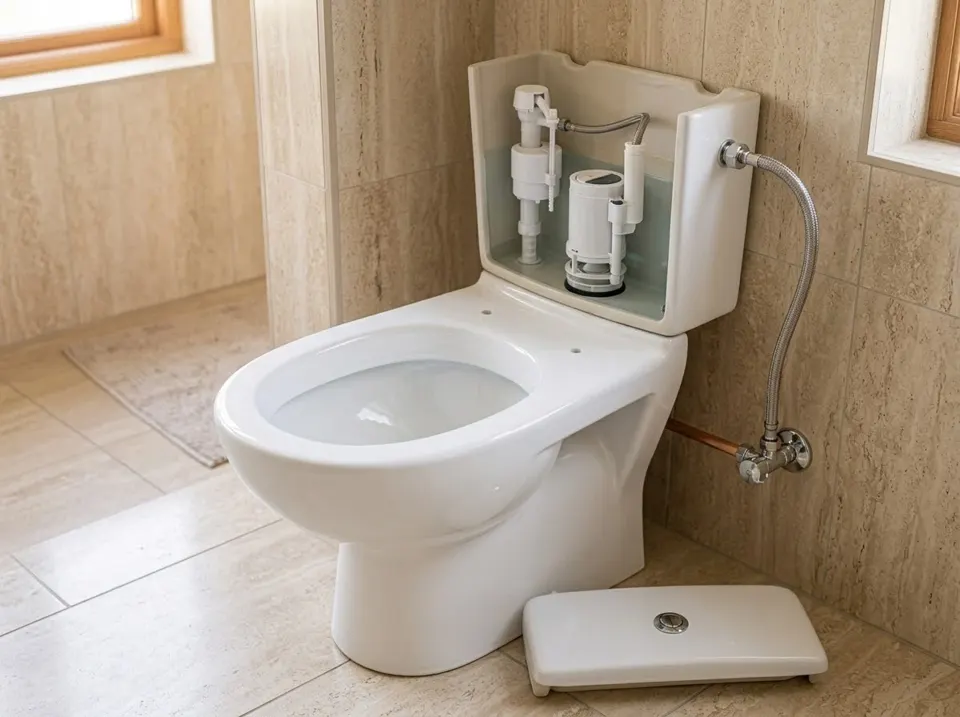
The City of Cape Town's water by-law limits the flush volume of toilet cisterns installed in homes, and most modern suites are dual-flush: a small flush for liquids and a larger one for solids. When comparing toilets, check the flush volumes on the product specification. A correctly set fill level matters too — a new cistern filled too high can spill into its overflow and run.
05 — Installation
How a toilet replacement is done.
- Step 1
Assess and measure
The existing toilet, waste outlet, supply and floor are inspected and measured, and options are explained with pricing for your approval.
- Step 2
Isolate and remove
Water is isolated, the cistern and pan are drained, and the old toilet is disconnected and removed with care for the surrounding floor and walls.
- Step 3
Prepare the connection
The waste opening is cleaned and checked, and a suitable new pan connector is used rather than reusing a worn one.
- Step 4
Position and secure
The new pan is aligned with the outlet and fixed securely so it does not rock or move.
- Step 5
Connect and set up
The cistern is fitted and connected to the supply, and the fill level and flush are set up for the new mechanism.
- Step 6
Test and finish
Several flushes are run while the supply and waste connections are checked for leaks before the job is finished and explained to you.
Water damage found under the old toilet? Our leak detection and repairs page explains how hidden leaks are traced.
06 — Pricing
Assessed first, priced before work.
Call-out details are confirmed with you directly by phone or WhatsApp. The replacement itself is priced after the assessment, because the toilet you choose, the outlet, the supply and the floor all affect the work. No work goes ahead until you approve the quote.
07 — Service area

We are a mobile plumbing service — a plumber comes to your home; we do not run a walk-in office in Durbanville. We replace toilets across Durbanville and nearby Northern Suburbs. See every area on our Durbanville service area page.
08 — Questions
Toilet replacement questions.
How much does a toilet replacement cost in Durbanville?
There is no honest fixed price without seeing the installation. The cost depends on the toilet you choose, whether you supply it, whether the new pan suits the existing waste outlet, the condition of the supply valve and connector, and whether any floor or wall work is needed once the old toilet is removed. After the assessment we explain what the job involves and give you the applicable pricing to approve.
Should I repair my toilet or replace it?
If the ceramics are sound and a single component such as the fill valve, flush valve, button or supply connector has failed, repair is often the practical choice. Replacement tends to make more sense when the pan or cistern is cracked, faults keep returning, parts are no longer practical to source, or you want a different toilet as part of a renovation. We do not decide this from a description. The toilet is assessed first and both options are explained so you can choose. Our toilet repairs page covers the common faults in more detail.
Will any new toilet fit where my old one was?
Not necessarily. Toilets differ in how and where they connect to the drainage. Some discharge into the floor and others into the wall, and the distance from the wall to a floor outlet varies between homes. A pan that does not match the existing outlet may need an offset connector or changes to the drainage. That is why the outlet, supply and space are measured before a new toilet is chosen. If you have already bought a toilet, send us its model details and we will check it against the installation during the assessment.
Can you install a toilet I have already bought?
Yes, we can install a toilet you supply, provided it suits the existing waste outlet, water supply and space. Before you buy, it helps to note whether your current toilet discharges into the floor or the wall and to keep the product specification sheet. If the toilet is already on site, we check it against the installation during the assessment and explain any additional parts or work it would need. We will tell you plainly if a supplied toilet is not a good match for the connection, rather than forcing it to fit.
Is the pan connector replaced when a toilet is changed?
Yes. The connector between the pan outlet and the waste pipe is a sealing part that wears and hardens with age, so reusing an old one risks a leak at the base of the new toilet. A suitable new connector is fitted as part of the installation. The waste opening is also cleaned and checked first. If the existing waste pipe is damaged, poorly positioned or sits at the wrong height for the new pan, we explain what we have found and what it would take to correct before continuing.
Are there water rules for new toilets in Cape Town?
Yes. The City of Cape Town's water by-law sets requirements for water-using fixtures, including limits on the flush volume of toilet cisterns installed in homes. In practice, most modern suites are dual-flush, giving a smaller flush for liquids and a larger one for solids. When you are choosing a toilet, check the product specification for its flush volumes. We can point out anything about a chosen suite or its mechanism that looks unsuitable during the assessment. For the current wording of the rules, refer to the City of Cape Town directly.
How long does a toilet replacement take?
A straightforward like-for-like replacement, where the new pan suits the existing outlet and the supply is in good order, can usually be completed in a single visit. The time increases when the outlet needs adapting, the supply valve or pipe must be replaced, the floor needs attention after the old toilet is removed, or a back-to-wall or wall-hung suite needs concealed work. We give you a realistic picture of the job after the assessment rather than a promised time before anyone has seen it.
Do you replace toilets in Durbanville estates and nearby suburbs?
Yes. The Cape Town Plumber is a mobile plumbing service attending homes across Durbanville and the surrounding Northern Suburbs, including Sonstraal Heights, Kenridge, Eversdal, Aurora, Vierlanden, Pinehurst and Durbanville Hills. We do not operate a walk-in office; a plumber comes to you. If you live in a security estate or complex, check any access arrangements or body corporate rules for building work before the visit. Call or send a WhatsApp message to 079 291 7407 to discuss your toilet and arrange an assessment.
Planning a new toilet in Durbanville?
Tell us about your current toilet and what you would like, and we will arrange an assessment. We also install toilets in nearby Brackenfell and Welgemoed.
Rated 4.9★ from 44 Google reviews · View our Google profile